
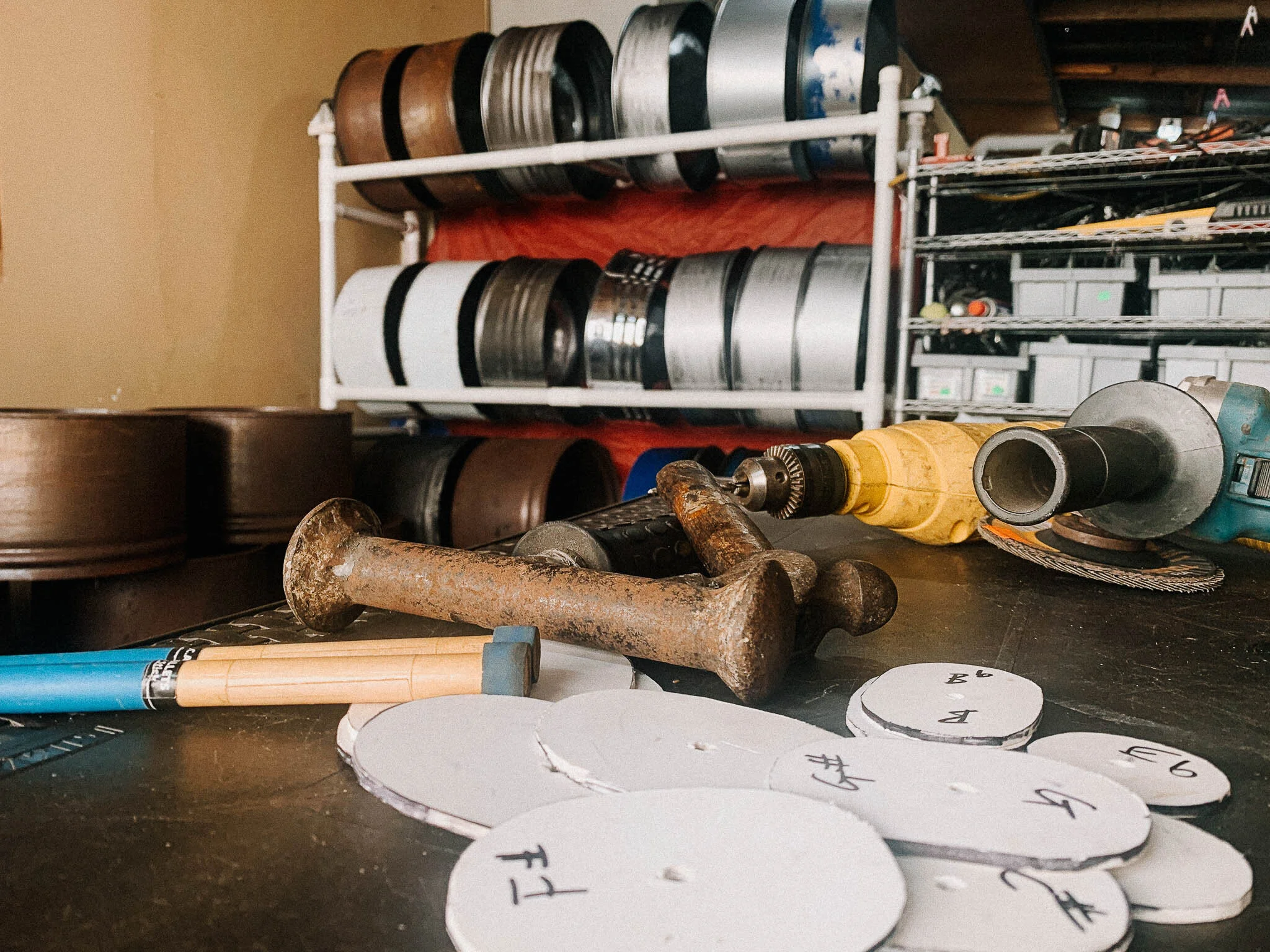
Manufacturing
Manufacturing & History
Steel drums (“Steelpan”) are traditionally made from oil drums. The pitched percussive instrument is comparatively still very young and was created in the 1930s on the Caribbean island of Trinidad, where it is considered the national instrument. This makes the steel drum the only acoustic instrument that was invented in the 20th century.
The term “steel drum” has caught on especially in the USA and Europe. In Trinidad, the term “drum” only refers to the raw material from which a Steelpan is built. Trinidad and Tobago is rich in crude oil and to this day, steel drums are still made from discarded oil barrels by forming a concave sound box with precise measurements and skill. The entire process from sinking to tuning requires a lot of hard work and practice to become a master craftsman of the Instrument.
Sinking
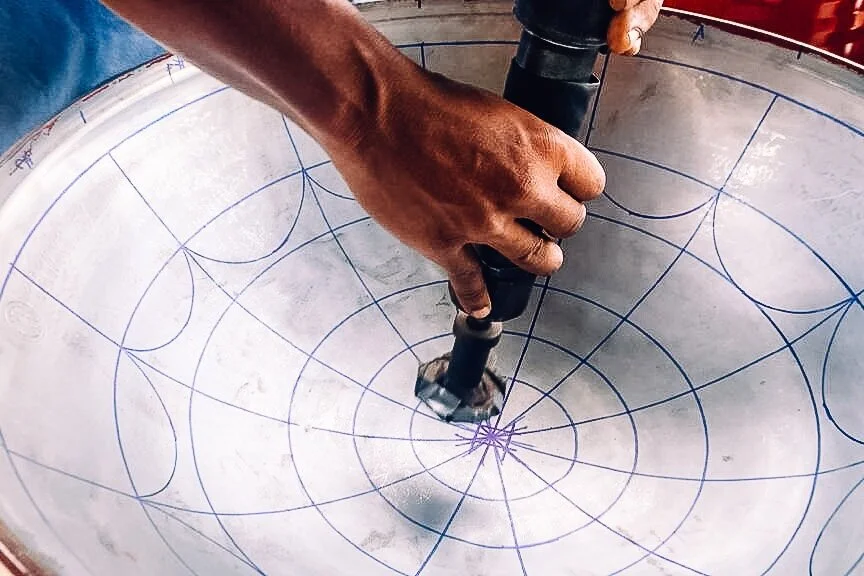
The “drum” gets its concave shape using a pneumatic hammer and a second hammer for smoothening. The “drum” is sunk to different depts depending on the type of Steelpan being made.
Drawing
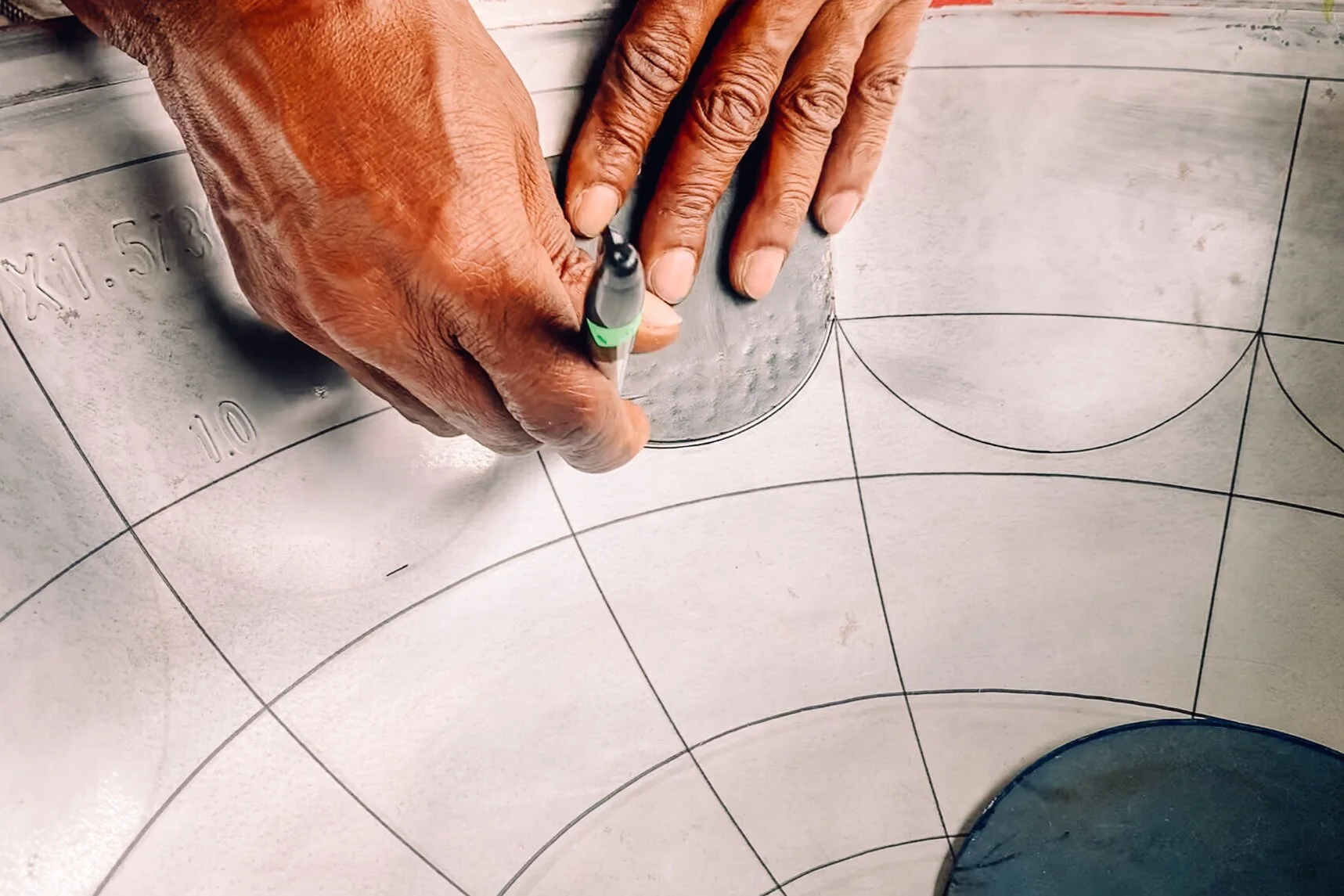
With the help of a pen, ruler and templates, each instrument - depending on the type - gets its special look. Each Steelpan has its very own design. The pan builder draws the various tones and labels them.
Counter Sink
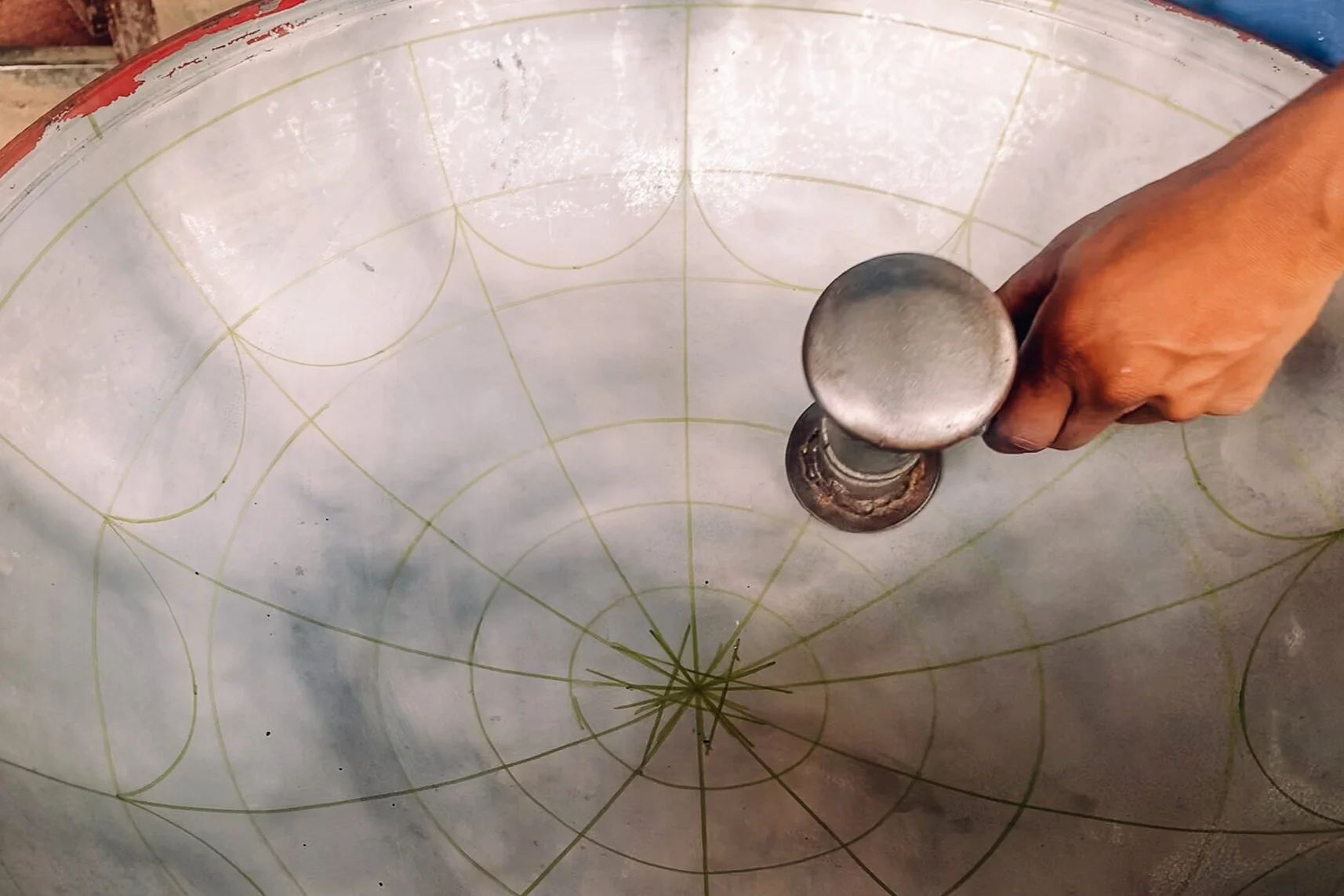
This is shaping the pan in preparation for grooving. When the lines are hammered, the grooving punch can run much smoother and the notes on the Steelpan get much tighter.
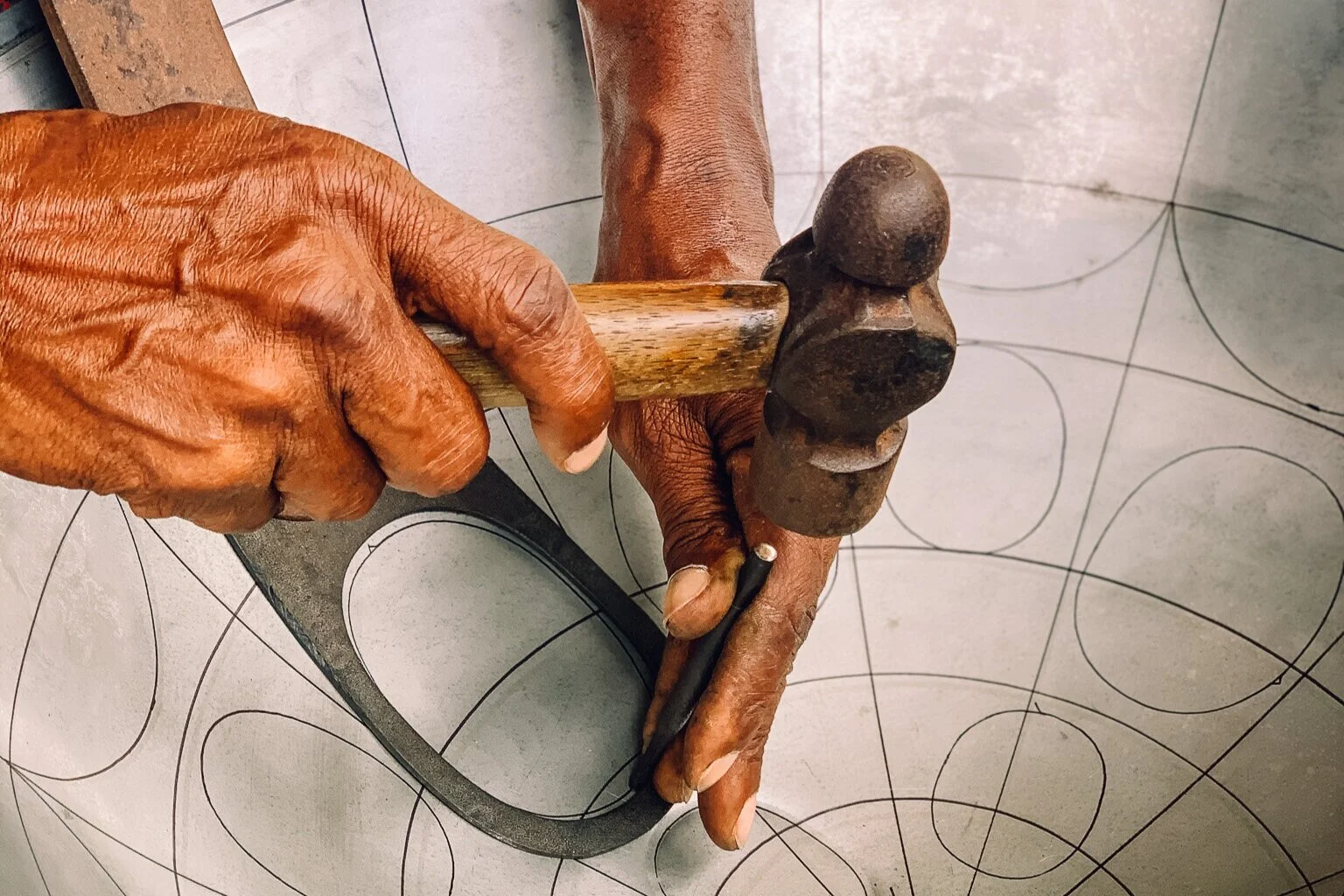
Grooving
During the grooving, a hammer and punch leaves an indentation that separates each note. This process is done either free hand as demonstrated or with a grooving clamp which takes some additional time.
Tuning
Tuning a steel drum is the most specific part of making steel drums and requires special skills and knowledge.
Preparation: After the burning process, the surface of the notes are adjusted at the discretion of the “tuner”.
Pre-tuning: Here the notes are brought into the right pitch before the steel drum gets its chrome layer and colour.
Fine-tuning: This means the final adjustment of the tones while the steel drum hangs in its final playable position.